
01 · PERCEPTION
Notice what other people miss
Learn to observe the person, implement, contact points, force directions, motion, and changing relationships before rushing into explanation.
A four-week live learning experience for coaches and lifters who want to understand movement deeply enough to solve unfamiliar problems without depending on somebody else's rules.
Most biomechanics education teaches conclusions: the best exercise, the correct technique, the muscle an exercise targets, the cue that is supposed to fix the problem.
That works until the person in front of you does not match the example. Then the rules begin to compete, certainty disappears, and you reach for another expert to tell you what to think.
The course is designed to change how you perceive, reason, experiment, and coach—not simply how much information you can recall.
Learn to observe the person, implement, contact points, force directions, motion, and changing relationships before rushing into explanation.
Use the person's goal to decide which anatomical, mechanical, technical, and experiential details are relevant—and which are noise.
Change one meaningful variable, observe the response, and let the result guide the next decision rather than forcing a predetermined answer.
Develop a repeatable process for working through unfamiliar exercises, pain concerns, technique questions, and client problems from first principles.
The goal is not to make you certain. It is to make you capable inside uncertainty.
Each week works across three connected layers. The teaching changes what you understand. The experiments change what you notice. The live coaching changes how you respond when the answer is not obvious.
Long-form, podcast-style teaching that explores the philosophy and reasoning behind the week's central skill.
Observation assignments, personal lifting experiments, movement analysis, and client work that turn ideas into lived understanding.
Live coaching where questions, failed experiments, surprises, and participant videos become material for deeper learning.
You first learn to see clearly, then orient around a goal, then experiment intelligently, and finally integrate the entire process into spontaneous coaching.
Separate observation from interpretation. Learn to describe the person, implement, motion, and changing relationships without immediately judging or correcting them.
You stop mistaking your first explanation for reality. Clear description becomes the stable ground beneath every later decision.
Replace “Is this good?” with “Good for what, for whom, and right now?” Learn how anatomy, force, comfort, performance, and technique only become meaningful relative to a goal.
You stop turning preferences into universal rules. The goal tells you what deserves attention.
Preserve options. Change one meaningful variable. Observe the response. Allow the next experiment to emerge from what actually happened.
Not knowing stops feeling like failure. It becomes a productive space for play, learning, and increasingly precise decisions.
Bring description, goals, physics, anatomy, experimentation, and human connection into one repeatable process for unfamiliar coaching problems.
You no longer need every answer in advance. You trust your ability to reconstruct one from first principles.
A focused long-form lesson or conversation that gives you a new lens without pretending the subject can be reduced to rules.
Structured prompts for observation, movement analysis, personal experiments, and work with clients.
A place to work through real problems, examine participant videos, and refine your reasoning in conversation.
You want to work confidently with different bodies, goals, histories, and responses without forcing everyone through the same model.
You want to understand your own training deeply enough to make intelligent decisions when technique, comfort, or progress changes.
You have consumed a great deal of information but still feel a gap between knowing concepts and using them in the gym.
You are willing to observe, question your assumptions, run experiments, and let reality change your mind.
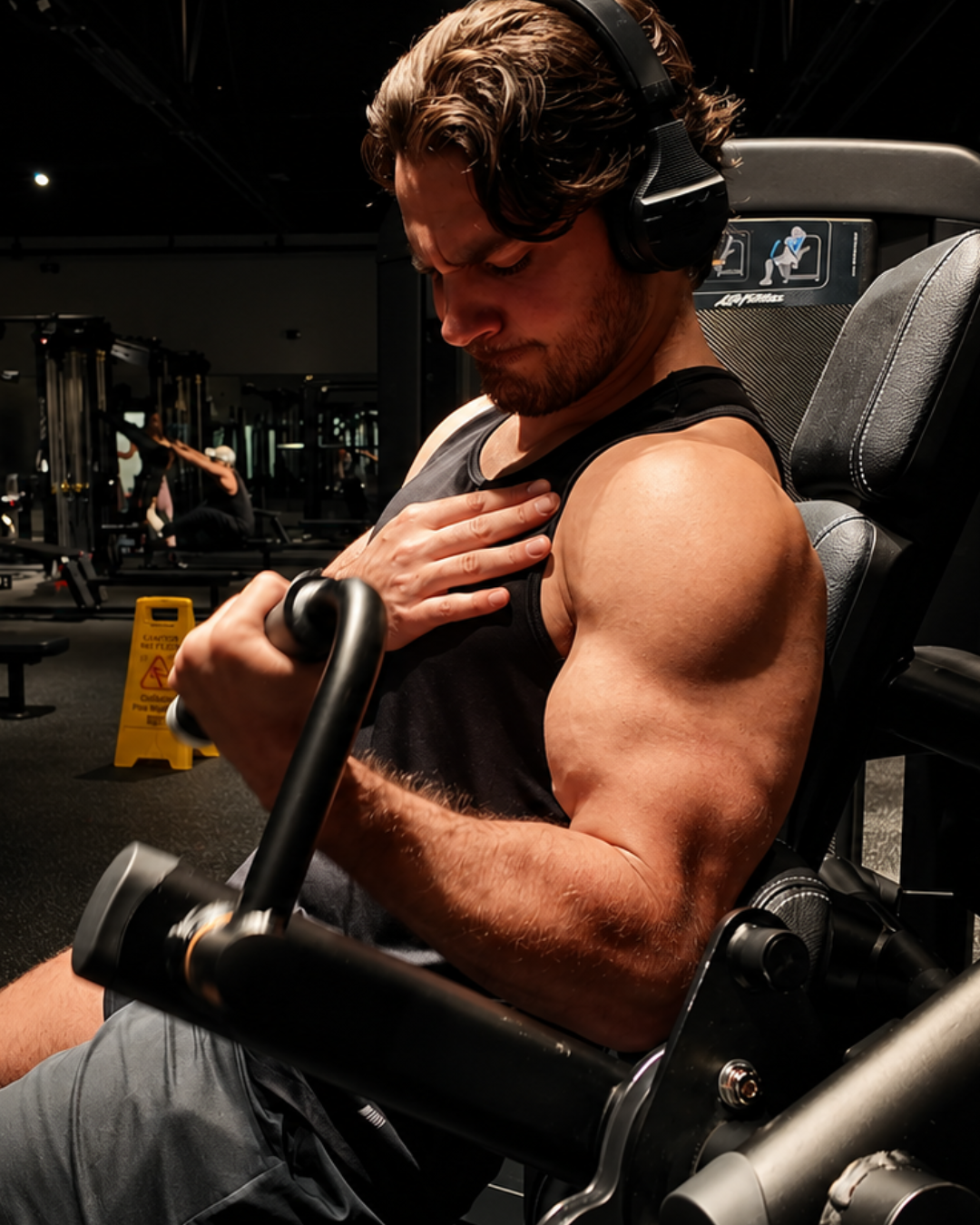
For years, I looked outside myself for the correct answer. I learned anatomy, biomechanics, exercise classifications, and coaching rules—but the real transformation happened when I stopped treating those ideas as conclusions and began using them as tools for inquiry.
Learning to see movement through physics turned the gym back into a place of curiosity and play. It taught me that the person is the fulcrum, the exercise is not fixed, and confidence does not have to come from certainty. This course is the process I now use to help people develop that same independence.
Join the waitlist to receive launch dates, pricing, and the first opportunity to enroll in Foundations of Biomechanics.
Anatomy and physics appear throughout, but the purpose is to teach you how to use them to solve real coaching problems rather than memorize isolated facts.
No. Curiosity, observation, and willingness to experiment matter more than already knowing advanced terminology.
No universal script accounts for every person, goal, and context. You will learn how to understand different options and test them intelligently.
Approach an unfamiliar problem, describe it clearly, identify the relevant goal, reason from fundamentals, design an experiment, and decide what to investigate next.
Be the first to access all information about the upcoming foundations course.

Get started today before this once in a lifetime opportunity expires.